
ALI G IS BACK — BUT IS THE JOKE STILL FUNNY?
Sacha Baron Cohen’s new film sparks accusations of racism and cultural stereotyping
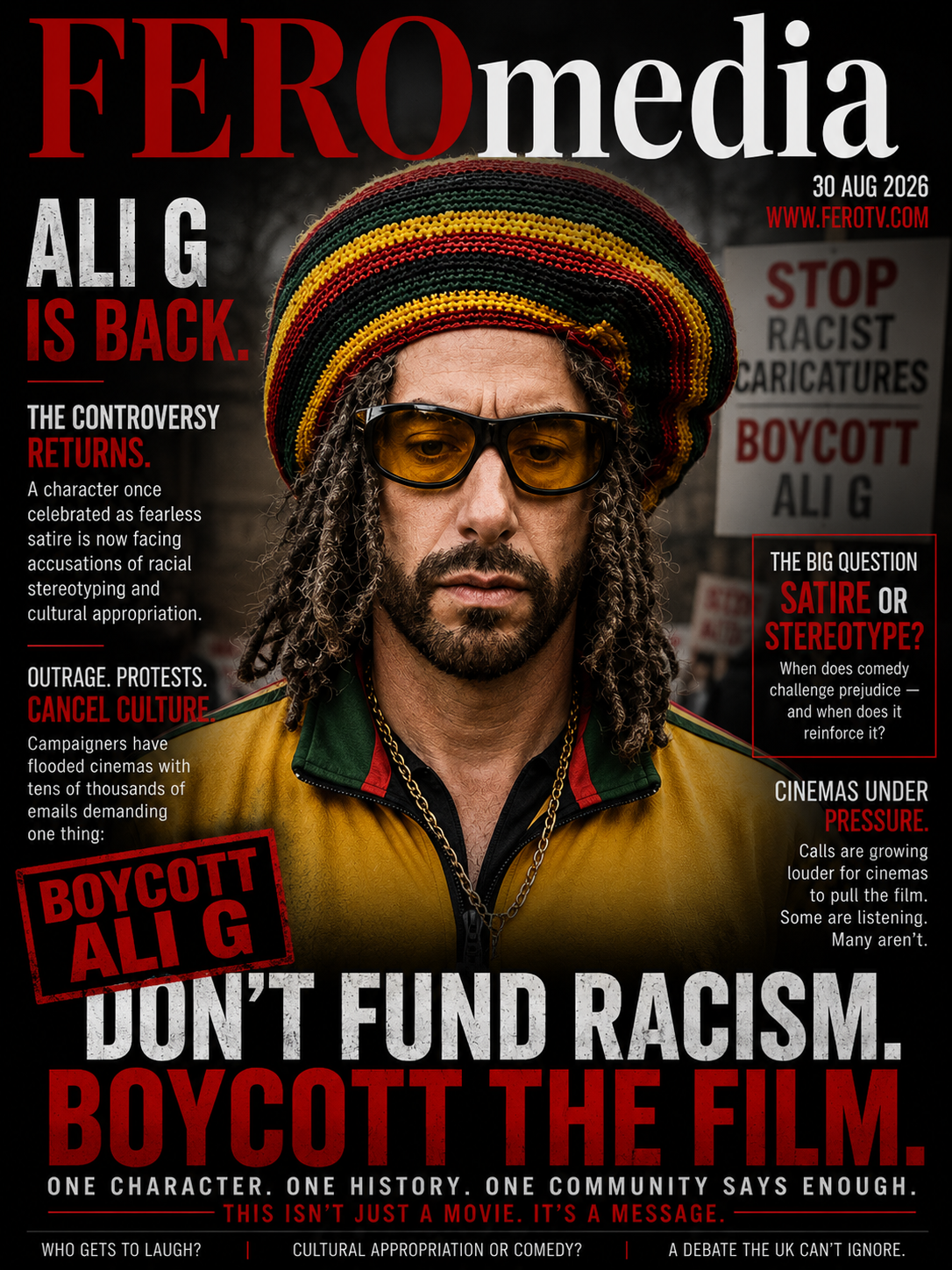
30 August 2026 | FERO Media
Sacha Baron Cohen has brought one of his most controversial characters back to the big screen — but this time, the laughter is being drowned out by a serious question: when does satire stop being satire and start reinforcing the very stereotypes it claims to mock?
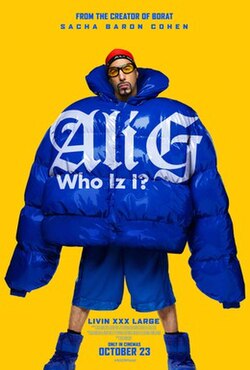
The forthcoming film, Ali G: Who Iz I?, is scheduled for release on 23 October 2026. Cohen returns as Ali G, the fictional wannabe rapper and self-styled “rude boy” who first appeared on British television in 1998. (The Guardian)
The reaction to the trailer has been anything but quiet.
A character from another era
Ali G was originally presented as a white, suburban character deliberately imitating elements of Black British and Jamaican culture. Cohen has long maintained that the joke is supposed to be on Ali G and the ignorant assumptions behind his behaviour, rather than on Black people themselves.
But critics argue that the distinction isn't always enough.
The new trailer shows Cohen once again adopting elements strongly associated with Black and Jamaican culture, including dreadlocks and a Rastafarian-style hat. Critics have accused the film of resurrecting stereotypes that many people believe should have been left in the early 2000s. (Variety Australia)
And that is where the debate becomes complicated.
Can you parody racism while simultaneously reproducing imagery that audiences recognise as racist?
The backlash is growing
A campaign led by UK media-monitoring platform NewsCord is calling on cinemas not to screen the movie. According to reports, the campaign had generated more than 37,000 emails to cinema chains by the end of August. (Complex)
Campaigners have revived criticisms that surrounded Ali G more than two decades ago. Some Black British commentators argued at the time that the character risked allowing audiences to laugh at Black street culture while using “satire” as a defence.
Those concerns have resurfaced because the character hasn't simply returned — he has returned looking remarkably similar to the character audiences remember from more than 20 years ago.
One UK cinema chain, Picturehouse, has also said it currently has no plans to screen the film, although reports caution against interpreting that statement as a definitive nationwide ban or boycott victory. (Variety Australia)
But is Ali G actually the target?
There is another side to this argument.
Supporters of Cohen say critics are missing the entire premise of the character. Ali G is deliberately portrayed as an ignorant white man who has appropriated what he believes to be Black culture. In that interpretation, the ridiculous behaviour is supposed to expose white ignorance, cultural appropriation and racial assumptions.
Cohen himself has previously defended the character along those lines.
The problem in 2026 is that audiences don't necessarily experience the joke in the way it was intended.
And that's an important distinction.
Intent doesn't automatically determine impact.
A comedian can intend to expose a stereotype while an audience member experiences the stereotype itself.
Comedy has changed
There is also a generational issue at play.
Ali G first appeared at a time when provocative comedy routinely pushed boundaries around race, gender and class. Today, audiences are considerably more conscious of cultural appropriation and the history behind racial caricature.
That doesn't mean comedy has to become sanitised.
It does mean comedians have to recognise that the cultural context surrounding a joke can change.
What was considered provocative satire in 2000 can look very different in 2026.
The bigger question
The controversy surrounding Ali G: Who Iz I? isn't simply about whether Sacha Baron Cohen is racist.
That's an easy question — and perhaps the least interesting one.
The more important question is:
Can a character built around racial stereotypes still successfully satirise those stereotypes in 2026?
Some people will say absolutely.
Others will argue that the character's imagery has become so closely associated with Black stereotypes that the original satirical intention has been lost.
And perhaps that's why the new film has created such a strong reaction before audiences have even seen it.
For FERO Media, the debate isn't about telling people what they should find funny.
It's about asking whether comedy should be judged purely by what the comedian intended, or also by what the audience receives.
Because sometimes the most uncomfortable question isn't:
“Was that joke racist?”
It's:
“Who exactly are we laughing at?”
FERO MEDIA | COMMENT
SATIRE. CULTURE. RACE. COMEDY.
When the character comes back, so does the conversation.










 Loading...