
FROM SURVIVAL TO SUPERHERO
The extraordinary story of Deeshh, the woman inspiring The Guardian
By Femi Iloyi | Filmmaker, FEROmedia
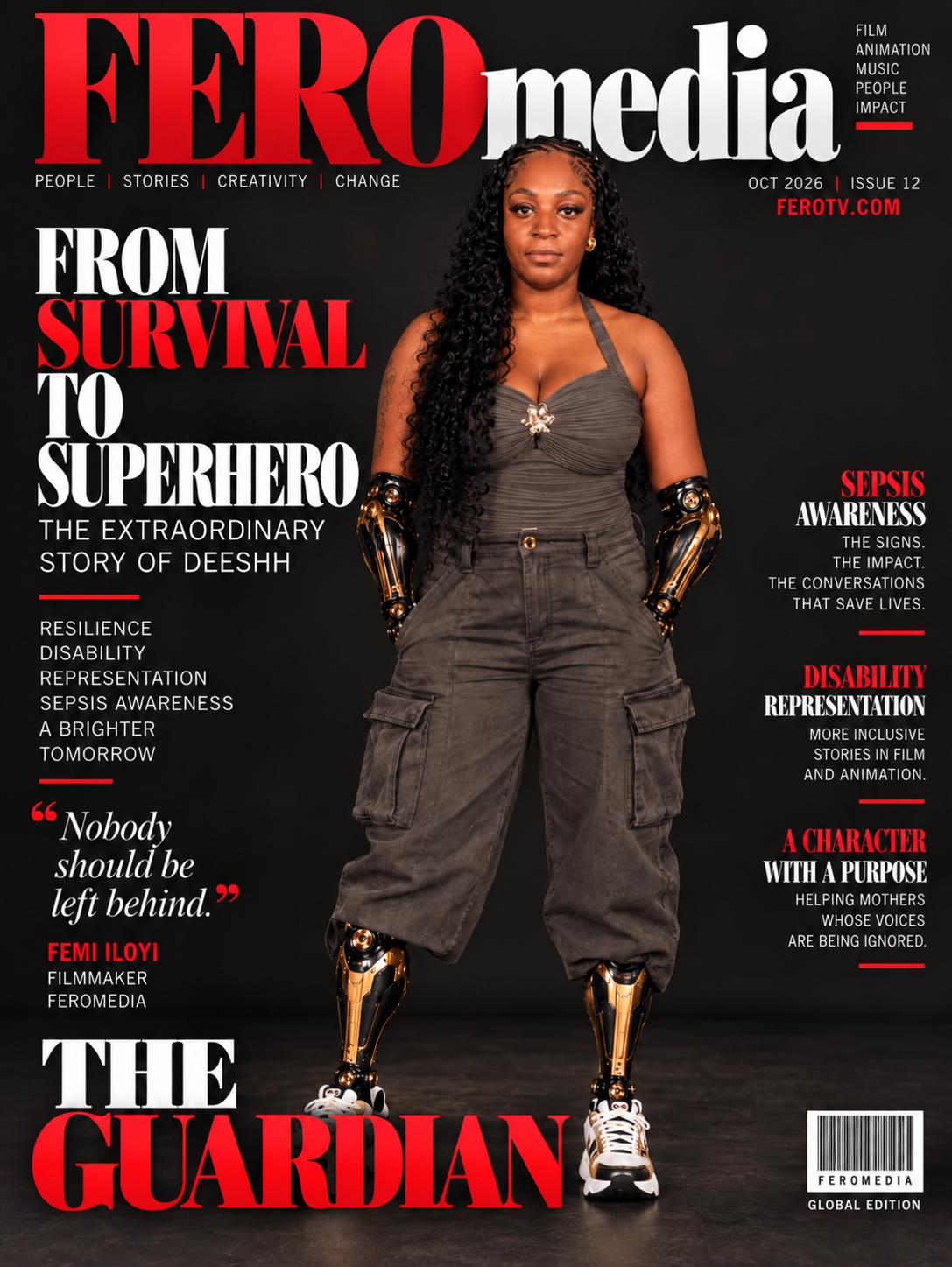
The conversation that stayed with me
Nearly two years ago, I met Deeshh when she appeared on my podcast, Fero TV. During our conversation, we spoke about sepsis and the profound impact it had on her life. What began as an interview became something much more meaningful to me. Her story stayed with me long after the cameras stopped rolling.
As a filmmaker, I believe that the stories we tell have the power to change how people see the world. Deeshh’s experience made me reflect on the people whose stories are too often overlooked, particularly those living with disabilities who rarely see themselves represented meaningfully in mainstream film and animation.
When I began developing Out of Time, I knew I wanted to create something that went beyond entertainment. I wanted to tell stories that could raise awareness, challenge perceptions, and give people a reason to see the world differently.
That was the beginning of an idea that would become The Guardian.
The reality behind the character
Deeshh’s experience with sepsis changed her life in ways that are difficult to imagine without hearing her story. She lost one arm (left) & the finger on her right hand and both legs below the knees
Yet her story is not defined solely by what happened to her. It is also a reminder of the importance of resilience, representation, and recognising the person beyond a diagnosis or disability.
I wanted to approach the character inspired by Deeshh with respect. The intention was never to portray disability as a weakness that needed to be overcome before someone could be considered extraordinary. Instead, I wanted to create a character whose presence challenged the narrow expectations often placed on disabled people.
Why should a person’s disability determine whether they can be a hero on screen?
For me, it should not.
Disabled people deserve to be represented as complete human beings: people with identities, ambitions, strength, vulnerability, purpose, and stories worth telling. They should not simply appear as background characters or be included as an afterthought.
They deserve to be at the centre of the story, too.
Why sepsis awareness matters
Sepsis is a life-threatening medical emergency that occurs when the body’s response to an infection damages its own tissues and organs. It can develop rapidly, and recognising the warning signs and seeking urgent medical attention can be critical.
Deeshh’s experience is a powerful reminder of why conversations about sepsis matter. Awareness can encourage people to take symptoms seriously, ask questions, and seek help when something does not feel right.
Possible warning signs in adults include new confusion or slurred speech, extreme shivering or muscle pain, difficulty breathing, passing very little or no urine, and skin that appears blue, pale, grey, or blotchy.
If you suspect sepsis and someone is seriously unwell, seek emergency medical help. In the UK, call 999 or go to A&E.
Sepsis awareness should not be limited to a single campaign or awareness day. It should be part of the wider conversation about health, listening to people’s concerns, and understanding how quickly an infection can become dangerous.
Through The Guardian, I hope to bring this message to a wider audience and encourage more people to learn about sepsis.
Why disability belongs in our stories
Film and animation have an extraordinary influence on how people understand themselves and others. When audiences repeatedly see the same kinds of heroes, they can begin to believe that heroism belongs only to certain people.
I want to challenge that idea.
The Guardian is inspired by Deeshh, but the character is a fictional creation with her own superhero identity and abilities. She is a woman with futuristic black-and-gold robotic limbs and a powerful purpose: to help mothers whose concerns are being ignored or dismissed.
Her abilities allow her to respond when a mother’s voice is not being heard. She becomes a presence that listens, supports, and helps that mother advocate for herself.
The character’s mission reflects something important beyond the superhero genre. Sometimes people do not need someone to speak over them. They need someone to listen, take their concerns seriously, and help ensure they are heard.
That message is particularly important in situations where a mother feels dismissed when expressing concerns about her child’s health.
By placing a disabled woman at the heart of a superhero story, I want to help broaden the definition of what a hero can look like. I want young viewers, disabled audiences, and families to see that a person’s physical circumstances do not limit the value of their voice or the significance of their contribution.
Representation is not simply about putting a different face on screen. It is about giving that person a meaningful role in the story.
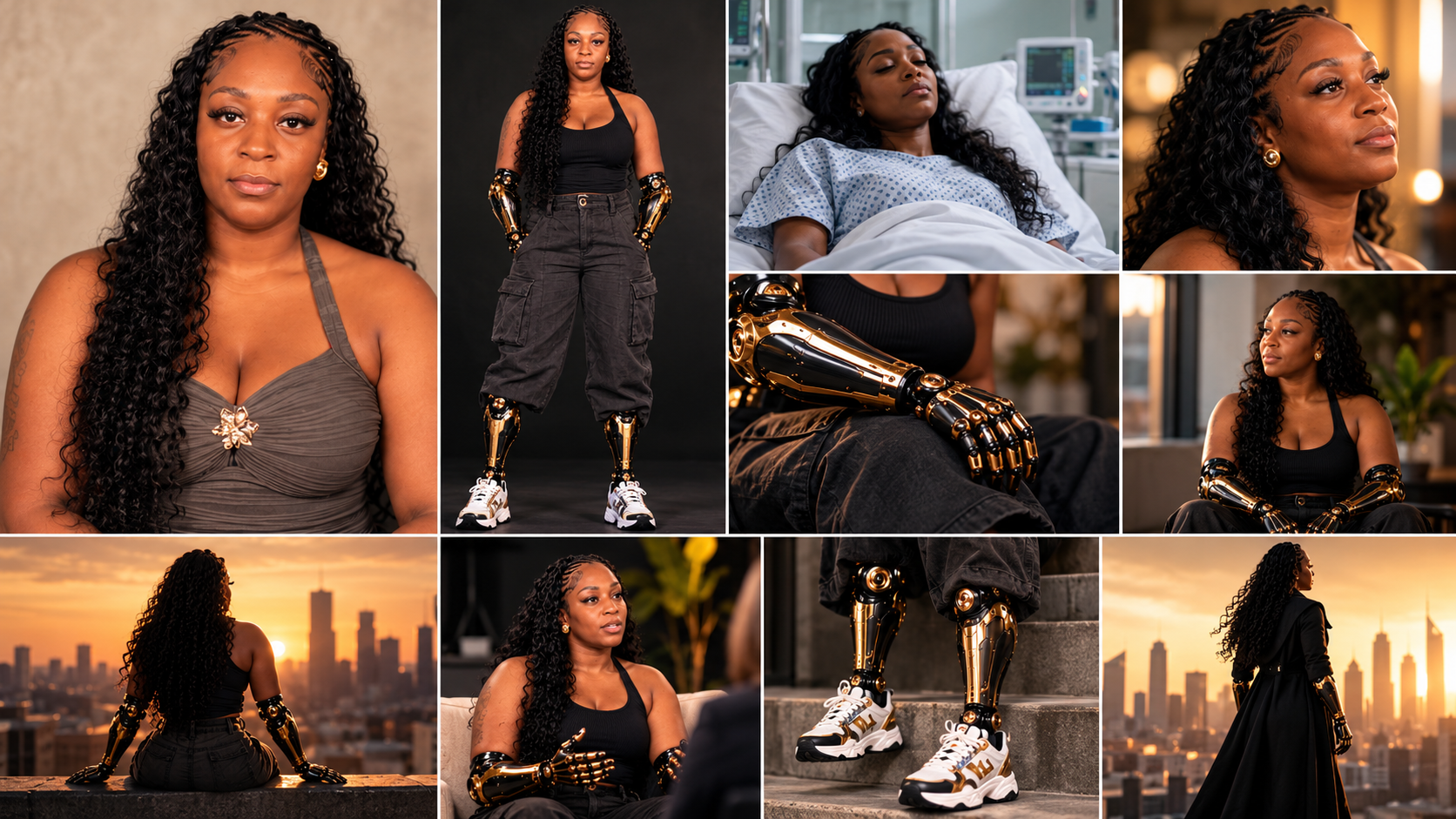
From a conversation to a creative vision
The journey from my conversation with Deeshh on Fero TV to the creation of The Guardian has been a reminder of how real-life stories can inspire creative ideas with a deeper purpose.
The pilot for The Guardian has been completed, and I hope to take the project further by developing it into an animated series.
My ambition is to create something that audiences can enjoy as a superhero story while also encouraging important conversations about sepsis, disability, representation, and the experience of not being heard.
As a filmmaker at FEROmedia, I want to use the opportunities offered by film and animation to tell stories that entertain, inform, and make people think. I also want to help create more opportunities for disabled people within the film industry, both in the stories we tell and in the creative spaces where those stories are made.
There is still work to do to make the industry more inclusive. But progress begins with decisions: whose stories we tell, who gets to participate, and whose experiences we consider worth bringing to the screen.
I hope The Guardian can play a small part in that change.
A hero with a purpose
For me, the most meaningful part of this project is the connection between a real person’s experience and the fictional world it has helped inspire.
Deeshh’s story prompted a conversation that stayed with me. That conversation helped inspire a character who represents resilience, visibility, and the importance of listening. The Guardian takes that inspiration into a fictional world where she can help mothers find the strength to speak up when their concerns are ignored.
The character is a superhero, but the message is grounded in real life: people deserve to be heard, their experiences deserve to be taken seriously, and disability should never be a reason to exclude someone from the stories that shape our culture.
I hope audiences will see The Guardian as more than another superhero concept. I hope it encourages conversations about sepsis, challenges assumptions about disability, and reminds us that there is room for everyone in film and animation.
Deeshh’s story helped inspire this vision. Now, I hope the character can help carry that message to others.
Because nobody should be left behind.
Femi Iloyi is a filmmaker at FEROmedia, the creative force behind Out of Time and the developing superhero project The Guardian.




 Loading...